
Water That Stays Clear and Swim-Ready
Chlorine Pool Services in Chelsea Park for residential pools requiring balanced sanitizer levels and preventative algae treatment
Heavy pool usage and extreme Texas heat push chlorine demand higher, requiring more frequent testing and adjustments to maintain the 1-3 ppm free chlorine range that keeps water safe and comfortable for swimmers. Splendid Dolphin Pool Co. delivers chlorine pool services in Chelsea Park that include chemical balancing, stabilizer management, water testing, and preventative algae treatment designed to prevent cloudy water, strong odors, and unsafe swimming conditions before they develop. Routine monitoring catches pH drift, low sanitizer levels, and alkalinity imbalances that compromise both swimmer comfort and equipment longevity.
The service addresses traditional residential chlorine pool systems by testing total and free chlorine, adjusting cyanuric acid to protect chlorine from ultraviolet degradation, balancing pH and alkalinity, and applying shock treatments when organic load exceeds sanitizer capacity. During peak summer months when bather load increases and sunlight intensity accelerates chlorine consumption, proactive care prevents the conditions that allow algae to establish and filtration systems to clog with organic debris.
Maintain consistent chlorine service to protect swimmers and extend the functional life of your pool equipment.
How Balanced Sanitizer Levels Protect Pools
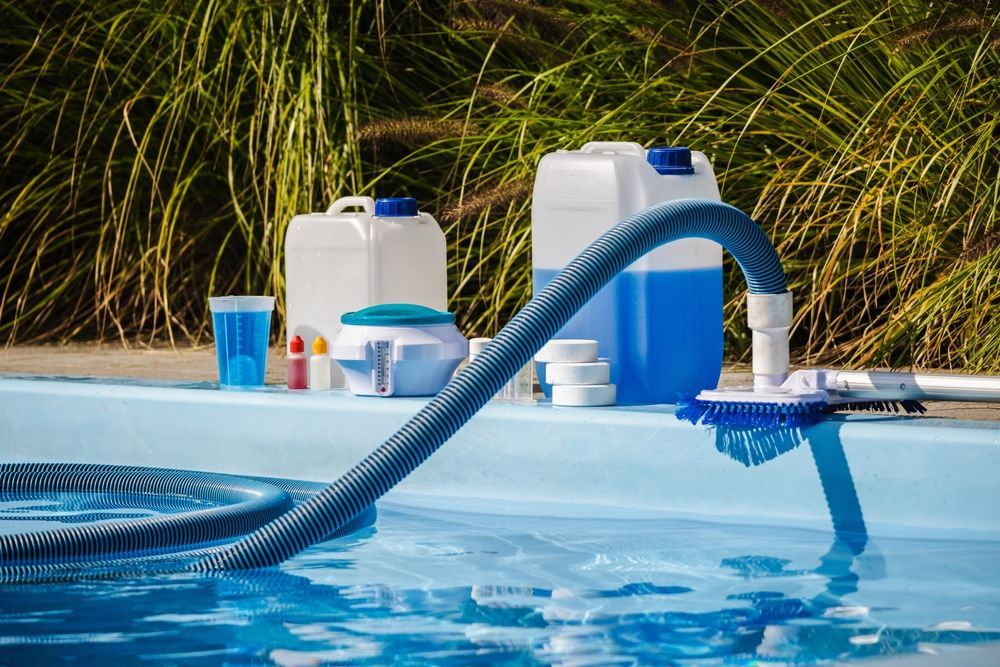
Chlorine pool maintenance involves testing water samples for sanitizer concentration, pH balance, total alkalinity, and stabilizer levels, then adjusting each parameter to maintain the ranges that prevent microbial growth, corrosion, and scale formation. When free chlorine drops below 1 ppm, bacteria and algae colonize quickly, turning water cloudy and creating conditions that require aggressive shock treatments and extended downtime to correct. Stabilizer management ensures cyanuric acid stays between 30 and 50 ppm, shielding chlorine molecules from ultraviolet breakdown without obstructing their ability to sanitize effectively.
You notice water that remains visibly clear between service visits, no chlorine odor that indicates chloramine buildup from inadequate sanitizer levels, and surfaces that stay smooth without the slimy algae film that develops when sanitation falters. Your filtration system runs efficiently because it processes clean water rather than fighting to remove suspended algae and organic particles that clog filter media and strain pump motors.
The service includes ongoing monitoring that adapts to seasonal changes in pool usage, temperature fluctuations, and rainfall that dilutes chemical concentrations. This foundational care protects both swimmers and the pumps, heaters, and filtration components that depend on balanced water chemistry to operate without accelerated corrosion or mineral deposits interfering with heat exchange and flow efficiency.
Answers to Frequent Service Questions
Routine chlorine pool maintenance prevents the water quality problems that make pools uncomfortable to use and expensive to restore once algae or bacteria establish themselves in untreated water.
What happens if chlorine levels drop too low?
Insufficient sanitizer allows bacteria, algae, and other microorganisms to multiply rapidly, turning water cloudy or green and creating conditions that require shock treatments, extended filtration, and sometimes professional algae remediation to restore safe swimming conditions.
How does Texas heat affect chlorine pools?
High temperatures and intense sunlight accelerate chlorine consumption, especially when stabilizer levels are inadequate, requiring more frequent testing and chemical additions during summer months to maintain the sanitizer residual needed for safe swimming.
Why does pool water sometimes smell strongly of chlorine?
That odor signals chloramine formation, which occurs when chlorine binds with ammonia and nitrogen compounds introduced by swimmers, indicating insufficient free chlorine to fully oxidize contaminants and requiring shock treatment to break down combined chlorine.
How often should pool water be tested?
Testing every visit ensures you catch pH drift, alkalinity shifts, and chlorine depletion before they compromise water quality, with increased frequency recommended during periods of heavy use or after rainstorms that dilute chemical concentrations.
What role does pH play in chlorine effectiveness?
Chlorine sanitizes most effectively between 7.4 and 7.6 pH, with efficiency dropping significantly as pH rises into alkaline ranges, making pH management essential for maximizing the disinfecting power of the chlorine you add to your pool.
Splendid Dolphin Pool Co. structures maintenance programs around consistent testing and chemical adjustments that keep residential chlorine pools in Chelsea Park safe and ready for use throughout the year. Request recurring service to maintain dependable water quality and protect your pool investment.